
Bring your Collection Metadata and Digital Assets together into one searchable public portal.
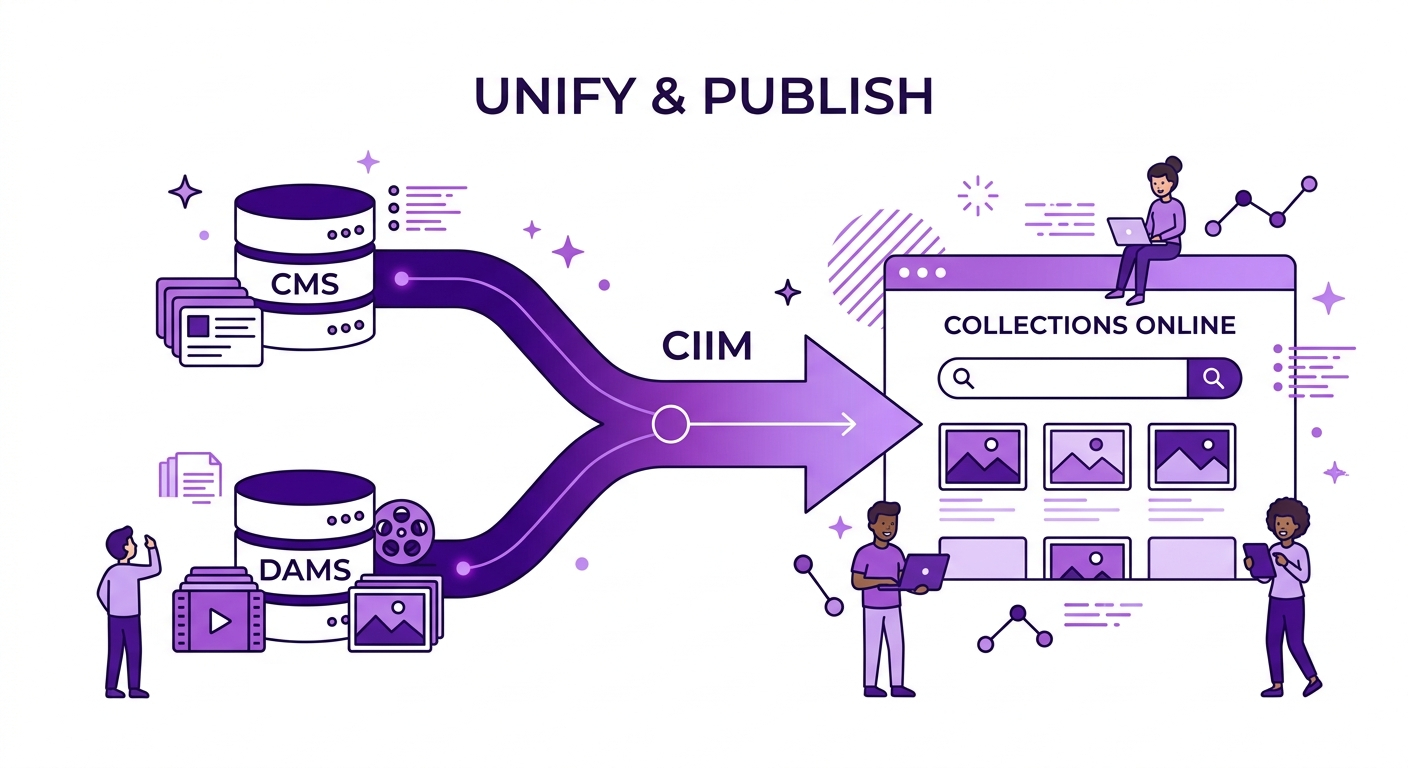
Connect your CMS and DAMS through CIIM to power a single Collections Online experience - delivering rich metadata and zoomable high-res media unified for public discovery.
CASE STUDY: British Museum
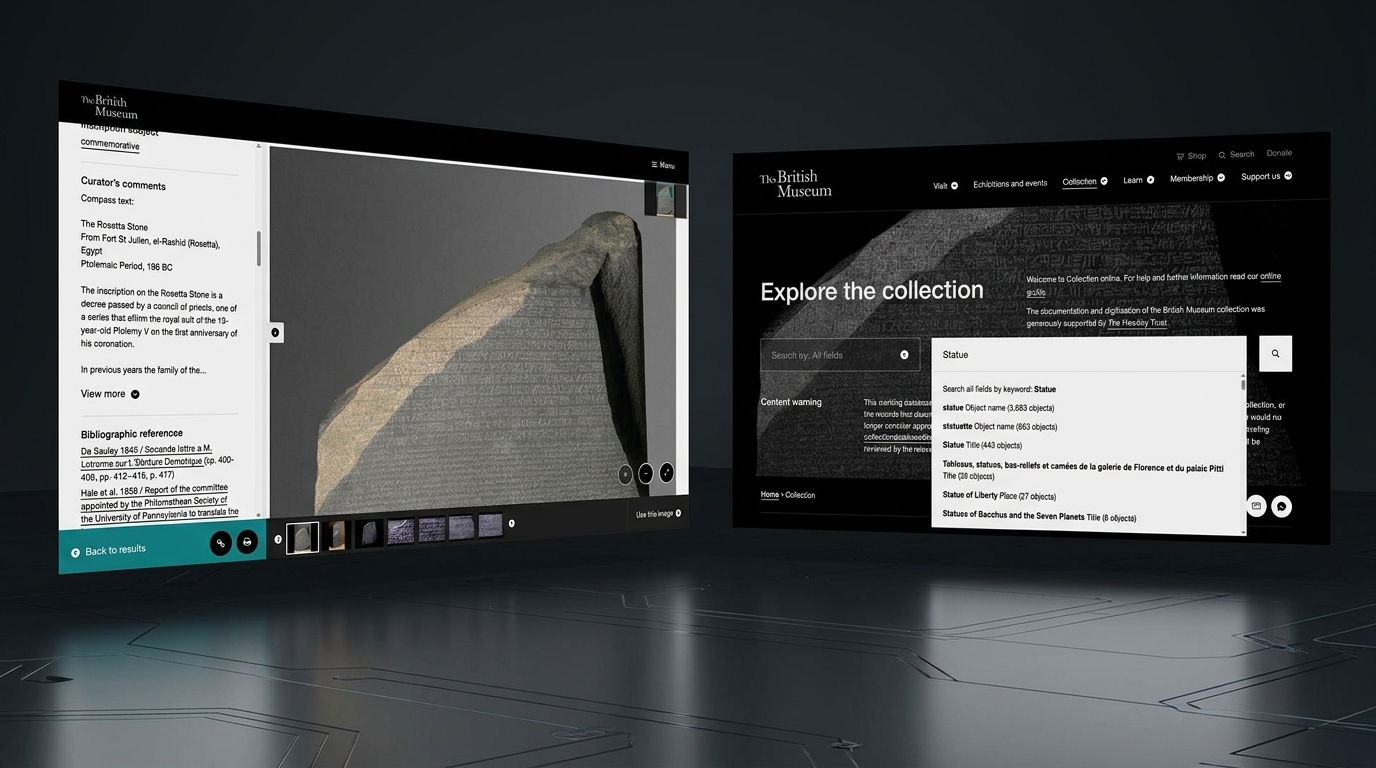
A great CIIM showcase
What the British Museum has built on CIIM, in conjunction with digital agency Numiko, in effect, is a perfect demonstration of the outcomes CIIM is designed to make achievable for any institution: a single, unified public portal drawing on collections and media together, key fields enriched and connected, faceted search built on controlled, even poly-hierarchical vocabularies.
Each field is a gateway, inviting further discovery
Open an individual object record and the difference becomes obvious. Few things on the page are a dead-end label. The production place, the excavator, the findspot, every material and technique, is a link through to its own authority record. Search for the excavator behind one object, and every other item that excavator touched comes back with it. This is what a well linked data model looks like in practice, the object isn't just described, it's situated among the people, places, and materials it shares with the rest of the collection.
The finer detail
Each high-resolution pyramidal tiff lets visitors zoom into the inlay work on a 4,500-year-old gaming board or the carving on a single hunting horn, now they can truly examine the fine detail and workmanship of museum pieces almost as if they had direct physical access.
Search just works
That same structured data is what makes the search experience shine, rather than a plain keyword box. Typing a term offers live suggestions that distinguish, for instance, searching "gold" as a material from searching "gold" as any word appearing anywhere in a record, and quoted phrases narrow things further still.
From there, results can be filtered by category, Person/organisation, Place, Object type, Material, and more, each showing how many matching terms it contains, with broader terms (like "arms/armour") automatically expanding into their more specific children (shield, sword, helmet) rather than forcing a visitor to already know the exact term they want. Filters stack across categories and within them, a search can be narrowed by material, place, and object type simultaneously, and refined further with a production-date range, an "on display only" toggle, or an "images only" toggle. Discovering the right filter term is made simple through the help of autocompletion, ensuring you always end up with results for your search.
A few details push this past what many collections online offer:
- Proper relevance ranking, ensuring search results make sense when reviewed against the search terms provided.
- Every search state is a shareable URL. Filters, sort order, and view mode are all encoded in the address bar, so a fully filtered search can be bookmarked or sent to a colleague exactly as constructed.
- Results are downloadable. Searches can be exported as a spreadsheet for reuse under the Museum's terms.
- Direct museum number lookup handles historical and inconsistently formatted numbers, offering conversion guidance for older reference styles rather than simply failing the search.